

Is GEO Just SEO With a New Name? An Honest Answer
Every few years, marketing gets a new acronym and a new wave of urgency to go with it. In 2026, that acronym is GEO: Generative Engine Optimization. If you run a small business, you’ve probably heard some version of the pitch already. Your SEO is outdated. AI is answering your customers’ questions now. You need a GEO strategy, and you need it yesterday.
So let’s answer the question directly. Is GEO just SEO with a new name?
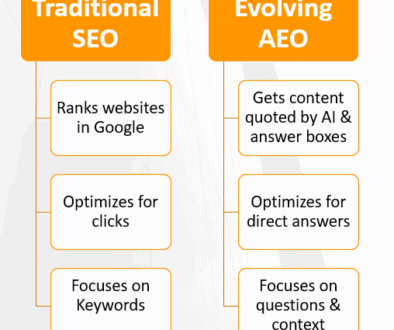
Not quite. But it isn’t a replacement for SEO either. GEO is SEO fundamentals, structured so AI systems can find them, trust them and quote them. The fundamentals still come first. What’s changed is how they need to be packaged, and how you measure whether they’re working.
Here’s what that means in practice, and where we’d actually spend the money.
What genuinely changed
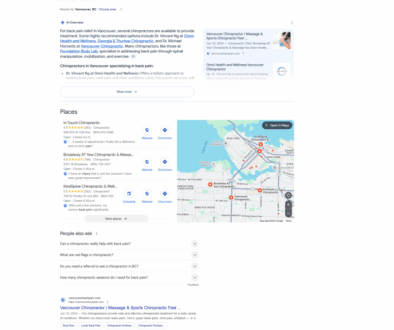
The shift is real, and it’s measurable. SparkToro’s 2026 study of US Google searches found that 68% of searches between January and April 2026 ended without a click to any website, up from roughly 60% in 2024. More people are getting their answer directly on the results page, from AI Overviews, featured snippets, knowledge panels and map listings, and never visiting a site at all.
Two honest caveats belong next to that number. First, SparkToro switched data panels between its 2024 and 2026 studies, so part of the jump reflects a change in measurement. Second, the study points to AI Overviews as a likely contributor but doesn’t isolate exactly how much of the increase they caused. The direction is clear. The precise size of the effect is still being worked out.
What this means for a business owner is simple: ranking well and getting clicks are no longer the same thing. You can hold your position on page one and still see fewer visits, because the answer is being delivered before anyone reaches your link.
What didn’t change (the part the hype skips)
Here’s the number that rarely makes it into the GEO sales pitch. In that same SparkToro study, only 0.34% of US searches moved into Google’s AI Mode during the study period. AI Overviews are everywhere, but the full conversational AI search experience is still a small slice of how people search.
Google is still where your customers look for a plumber, an accountant or a renovation contractor. And the AI answers they see aren’t generated from nothing. They’re assembled from the open web: your website, your Google Business Profile, your reviews, directory listings and the other places your business is mentioned.
That has an important implication. If your site is slow, thin, poorly indexed or inconsistent, AI systems can’t cite you any more than Google could rank you. There’s no GEO shortcut around weak foundations.
What carries over from SEO, unchanged
Most of what made SEO work still does the heavy lifting for AI visibility:
- Crawlability and indexing. If search engines can’t access and understand a page, neither can the AI systems built on top of them.
- Authority. Links and mentions from credible sources still signal that you’re worth trusting, and worth quoting.
- Reviews and reputation. Volume, recency and substance of reviews feed directly into local results and AI summaries alike.
- Helpful content. Pages that answer real customer questions clearly have always performed well. They’re also exactly what AI systems look for when assembling an answer.
- Accurate business information. Correct hours, service areas and contact details across your site and listings.
If your agency has been doing these things well, you already have most of a GEO strategy. If they haven’t, that’s the real problem, and a new acronym won’t fix it.
What’s genuinely new
That said, GEO isn’t pure rebranding. A few things matter much more now than they did three years ago:
- Structured data moves from bonus to requirement. Schema markup (Organization, LocalBusiness, Service, FAQ) tells machines exactly what your business is, what you offer and where. Search engines treated it as a nice-to-have. AI systems lean on it to extract facts with confidence.
- Entity clarity. An AI system needs to be certain who you are before it recommends you. That means your business name, services, location and positioning should be described consistently everywhere they appear: your site, your Google Business Profile, directories and social profiles. Inconsistency creates doubt, and doubt means you get left out of the answer.
- Answer-first content. AI tools pull passages, not pages. Content that states the answer in the first sentence or two, then adds context, is far easier to extract and cite than content that builds slowly toward a point.
- Citations as a metric. Rank tracking tells you where your link appears. It doesn’t tell you whether you’re mentioned when someone asks an AI tool for a recommendation in your category. Tracking AI citations and share of voice for the questions your customers actually ask is a new and necessary layer of reporting.
- Off-site mentions carry more weight. AI answers draw on reviews, community discussions, local media and industry directories. What others say about you increasingly shapes what AI says about you.
Where GEO fits in the Applied Marketing Framework
At Juuga, our Applied Marketing© Framework is built on one principle: sequence matters. Each layer informs the next, and skipping ahead creates expensive problems. Automation built without audience data doesn’t scale. GEO built without SEO foundations doesn’t either.
Here’s how we sequence it:
- Foundations first. Technical site health, a complete and accurate Google Business Profile, a steady review program and clear core service pages.
- Structure for AI. Implement schema, align your business information everywhere it appears, and rewrite your most important pages so they lead with direct answers.
- Measure and automate. Track AI citations alongside rankings, connect visibility to leads and bookings in your reporting, and automate the monitoring so it runs every week without manual effort.
In the interest of transparency: when we ran a GEO visibility audit on our own site, the biggest gap wasn’t content. It was structured data. That’s a common pattern. Many businesses have reasonable content that AI systems can’t confidently interpret, and that’s usually one of the most fixable problems on the list.
Three things you can do this month
You don’t need a new budget line to start. Begin with these:
- Ask the questions your customers ask. Pick the five questions you hear most often from prospects. Search them in Google, then ask them in ChatGPT or Perplexity. Note who gets mentioned and cited. That’s your real competitive set in AI search.
- Audit your facts. Check that your business name, services, service areas, hours and contact details match across your website, Google Business Profile and major directories. Then check whether your site has schema markup at all.
- Rewrite three openings. Take your three most important service pages and make sure the first two sentences directly answer the question a customer would ask about that service.
The bottom line
So, is GEO just SEO with a new name? No. The way visibility is earned and measured has genuinely shifted, and businesses that ignore structured data, entity consistency and citation tracking will fall behind.
But GEO isn’t a reason to abandon what works. The businesses that will show up in AI answers are, overwhelmingly, the ones that did SEO properly in the first place, and then structured it so machines could understand it. Fix the foundation, structure it for AI, then measure what matters.
If you’d like to know where your business currently stands, Juuga’s team can run a GEO visibility review and show you exactly which gaps to close first.
Sources
- SparkToro, “In 2026, Less than One Third of Google Searches Still Send a Click” (Similarweb clickstream data, US, January to April 2026): sparktoro.com/blog/in-2026-less-than-one-third-of-google-searches-still-send-a-click/
- Search Engine Land, “Google zero-click searches hit 68% in early 2026: Study”: searchengineland.com/google-zero-click-searches-reach-68-in-early-2026-study-479717